Search
 Nursing Home Law News
California Nursing Home’s Failure To Provide Fall-Prevention Safeguards Results In A Substantial Fine


 Too little, too late– best summarizes Pilgrim Haven Health Facility of Los Angeles, reaction to fall-prevention measures suggested by a patient’s physician and the facility itself. The omissions appear to be responsible for the fall-related death of an 85-year-old man and have initiated a substantial fine by the California Department of Health.
In the course of investigating the death of the elderly patient, authorities determined that Pilgrim Health made numerous errors with respect to its medical treatment of a patient with a history of falling.
After an initial fall in October, 2009, fall precautions were order by the man’s physician and by Pilgrim Health itself. The physician instructed the nursing home to use an electronic fall monitor on the patient and the facility noted that the man should have his walker within reach at all times and should further be supervised while walking.
Just two months later, the man was involved in a second fall at the facility without the knowledge of the facility staff— and away from his walker. The facilities initial examination of the man appeared to show little with respect to visible injuries. However, in the evening following the fall, the man’s injuries quickly became apparent.
During the evening following the fall, the man’s condition began to deteriorate becoming pale, motionless and began vomiting. Even after staff at Pilgrim Haven noted the change in the man’s condition, they failed to immediately conduct a full neurological assessment or notify the man’s doctor as to his change in condition.
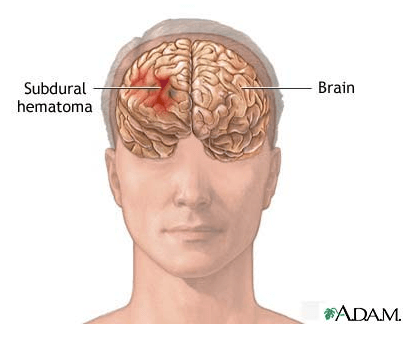
Hours after the extent of the man’s injuries began to be apparent, he was transported to a hospital where he died shortly after his arrival. A CT scan determined that the man’s death was due to bleeding in his brain that investigators attribute to his previous fall.
As a result of the fall, Pilgrim Haven was fined $100,000 — the maximum fine allowable under California law. Pilgrim Have is part of the American Baptist Homes of the West. Read more about this nursing home fall as reported by the L.A. Times here.
Head Injuries From Falls
As we age, our bodies lose some of the protective fluids that cushion our joints and even our brains putting us at risk for more serious type of injures that are usually not associated with younger people. For this reason, older people are at a heightened risk for sustaining head injuries in fall.
Even a minor head trauma can put excessive force on the brain that may result in inter-cranial bleed (commonly referred to as a subdural hematoma). Subdural hematomas occur when blood vessels burst in the space between the brain and the outermost membrane that covers the brain (dura mater). The collection of blood forms a hematoma, which puts pressure on the brain tissue. When the pressure builds and goes unrelieved, people can suffer serious injury or even death.
Nursing homes must be tuned in to patients who sustain even minor head-related trauma and be mindful of the symptoms of a subdural hematoma. When identified early, patients who sustain a head injury are more likely to have better outcome and survival rate.
For more information on nursing homes in California look here.
Click on the links for information on nursing homes in San Diego , Los Angeles and San Francisco
Related Nursing Home Law Center LLC Blog Entries:
Even Common Falls Put Elderly At Risk For Developing Subdural Hematomas
Falls In Nursing Homes Are A Serious Threat To The Safety Of Many Patients
How Many Falls Is Enough To Impose Responsibility On Nursing Home?
‘Poor Judgment’ To Blame For CNA’s Failure To Implement Fall Precautions In Minnesota Nursing Home Death