Medication errors significantly threaten patient safety, especially among vulnerable nursing home residents. Receiving the wrong drug or dose can cause a nursing home resident to suffer an injury, illness, or even fatal complications. At the very least, it can lead to no relief from the patient's condition.
Medication is a crucial element of treatment, and there is no room for error. Unfortunately, many nursing homes fail to prevent medication errors, putting residents' health and lives at risk.
The personal injury attorneys at Nursing Home Law Center, LLC, help victims of medication errors pursue financial aid and seek financial compensation through litigation or out-of-court settlements.
Contact our nursing home abuse attorneys at (800) 926-7565 for a free legal case review.
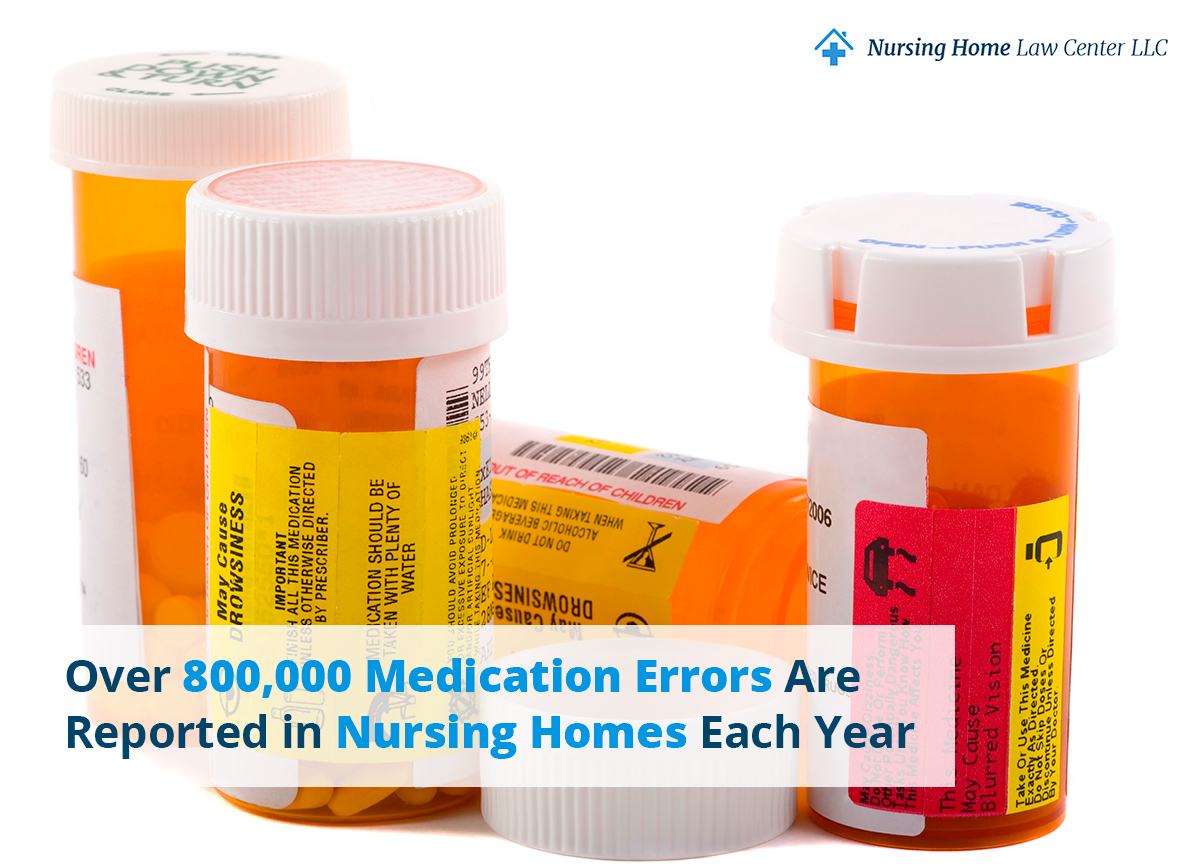
What is a Medication Error?
A medication error is "any preventable event that may cause or lead to inappropriate medication use or patient harm while the medication is in the control of the healthcare professional, patient, or consumer.”
These serious errors can occur at any step of the medication-use system, which are:
Medication errors can occur in any hospital, rehabilitation center, hospice, and nursing home, by any staff member.
The Most Common Medication Errors
A medication error can occur in several ways. Here are some of the most common medication errors:
Prescription Errors and Patient's Medical History
Medication mistakes can occur at the first step of the medication-use process when a doctor prescribes a patient the wrong drug, dose form, or medication administration. Mistakes linked to prescription errors are:
- Misdiagnosing a patient: A physician that fails to diagnose a patient's condition correctly may prescribe a drug for another condition.
- Filing the wrong form: A medication error can occur when a doctor mixes up two or more drug names and prescribes the wrong medicine to the patient.
- Not considering the patient's history: When a patient takes other medications, doctors must consider possible drug-to-drug interactions based on the patient's record.
- Dispensing the Wrong Dosage: A pharmacist may grab the correct drug in the incorrect dosage or dosage form, e.g., administering 1000mg instead of 500mg or buccal instead of sublingual medications.
Incorrect Medication Administration
Licensed nurses are responsible for administering drugs to patients using the correct methods. Medication errors at this stage can occur by:
- Administering medications incorrectly: This mistake occurs when a nursing staff member administers the drug incorrectly, such as having residents swallow pills meant to dissolve under the tongue (sublingual medications).
- Giving residents medications too early or too late: Most medications require correct timing with little room for adjustment. Timing errors occur when nurses administer drugs too early or too late relative to the predetermined schedule.
- Preparing a drug incorrectly: Drug preparation errors at this stage occur when nurses create an incorrectly formulated drug, such as when a medication is diluted excessively.
- Intentional nursing home abuse: Sometimes, medication errors in nursing homes are intentional. A nursing home staff member may deliberately overdose residents or administer fatigue-causing drugs to keep them “under control.”
Common Causes of Nursing Home Medication Errors
Proper medication management is crucial in maintaining high-quality care. Unfortunately, some nursing homes have insufficient protocols, practices, and strategies to prevent medication errors.
Medication errors in nursing homes and assisted living facilities have several contributing factors, such as:
- Understaffing: Nursing facilities with chronic short-staffing issues may experience higher incidences of nursing home neglect or negligence.
- Inadequate training: Nursing facility staff members need regular training on how to prevent medication errors. Each staff member must know their role in preventing these mistakes, especially employees directly responsible for drug administration and preparation.
- Negligent hiring practices: Employees with inadequate education or experience may be more prone to committing medication errors due to a lack of knowledge, both practical and technical.
- Fragmented care errors: Poor communication between healthcare professionals can make way for common medication errors, such as dispensing the wrong dose or using an incorrect administration method.
- Poor electronic systems: Nursing facilities that use paper systems for prescriptions are often more susceptible to clerical mistakes.
However, these mistakes usually occur due to a facility's failure to provide nursing staff members with what they need for proper medication management. Nursing homes can prevent errors by ensuring all staff members are adequately trained to dispense medication to residents.
Medication Errors and Adverse Side Effects
Medication errors in nursing homes can lead to side effects. However, if a patient is given the wrong medication or dose, their body's reaction may be more intense.
Mild side effects may include:
- Nausea and vomiting
- Weakness
- Fatigue
- Drowsiness
- Balance and coordination problems
- Itching and rashes
- Constipation or diarrhea
- Confusion
- General discomfort
Although relatively rare, medication errors can also cause severe side effects, such as:
- Seizures
- Extreme vomiting
- Rapid heartbeat
- Fainting
- Coma
- Death
Increased Risk of Injury and Patient Safety
Deviating from medication standards can elevate the risk of injury among nursing home residents. The main reason is that medication errors can lead to side effects that increase the risk of falling, such as drowsiness, lightheadedness, and mental confusion.
Falls are the leading cause of severe injuries and death in nursing homes. Elderly residents are particularly at risk due to their reduced physical conditions and ability to recover.
Medication errors can also increase the risk of elopement among high-risk nursing home residents (e.g., dementia patients). Elopement is when a resident wanders through or leaves the facility without authorization, usually due to confusion, cognitive impairments, or discomfort.
It can lead to serious injury, especially if the nursing home resident manages to leave the facility altogether.
Filing a Nursing Home Medication Error Claim
Nursing homes are responsible for ensuring medication safety across all channels. When a medication error occurs and causes harm to a resident, the negligent parties (including the facility) may be held liable for a nursing home abuse lawsuit.
Proving Medication Errors in Nursing Homes
To file a nursing facility abuse or medical malpractice claim, you must prove the following:
- The defendant owed a duty of care to you
- The defendant breached this duty of care
- This breach led to the medication error
- The medication error directly caused your injuries and other losses
Who is Liable?
Medication errors in nursing homes can result from the negligence of:
- Prescribing doctors
- Nurses or nursing aides
- Pharmacists
- Other nursing facility staff involved in the medication system
Pharmaceutical companies may also be liable for injuries if the case involves a defective drug.
Regardless of who is at fault for the mistake, nursing homes may be accountable for nursing home medication errors for failing to uphold medication standards.
Evidence
Nursing care home abuse cases involving drug errors must prove that 1) the error occurred due to the negligence of staff members and 2) the error caused harm. The following forms of evidence can help you establish these two elements:
- Medical records
- Test results
- Prescriptions
- Drug packaging
- The actual medications that are given to you
- Expert testimony
- Victim's testimony
Consider seeking professional medical advice to see how you can prove that the error, not other conditions, caused your injuries. You can discuss this further with your lawyer during your free case review.
Financial Compensation for Nursing Home Medication Errors
By filing a personal injury case against a negligent nursing home for a drug error, you could pursue financial aid or compensation for the following losses:
- Medical bills
- Disability
- Pain and suffering
- Loss of quality of life
- Wrongful death
Our nursing home attorneys will calculate the estimated value of your settlement during your free case review.
How a Nursing Home Neglect and Abuse Lawyer Can Help
Drug errors in nursing homes are often challenging to prove without a nursing home abuse lawyer. Although you may have a paper trail showing you were given the wrong medication, it usually takes a lot of evidence and preparation to establish the nursing home's negligence.
You shouldn't have to deal with a complicated case alone. A nursing care home abuse lawyer can help you:
- Investigate how and why the medication or lab error occurred
- Pinpoint the nursing facility employees at fault
- Determine the extent of your losses
- Gather substantial evidence to support your medication error claim
- File your claim to the nursing home's insurance company
- Negotiate settlement values
- File a nursing home abuse lawsuit in civil court, if necessary
Our elder abuse attorneys can also help you seek professional medical advice to address the effects of the drug error. Find out more during your free case review.
Schedule a Free Legal Case Review with Our Lawyers Today
Proper prescribing, dispensing, and administering residents' medications is a bare minimum obligation for a nursing facility. Unfortunately, negligence can sometimes occur, putting residents at risk of delayed treatment, worsening illnesses, or fatal complications.
Did you or a loved one experience a medication error in a nursing facility? Did this error lead to significant injuries or losses?
The nursing facility abuse attorneys at Nursing Home Law Center, LLC, can help you hold the nursing facility accountable for its negligence.
Contact us at (800) 926-7565 for a free legal case review. All confidential or sensitive information you share with our legal team will remain private under an attorney-client relationship.
Our experienced lawyers handle all accepted nursing care abuse cases on a contingency fee basis. This arrangement means you only have to pay for our legal services if we win your case.
Resources: